Saturday, 21 June 2014

The Big Clean - Dili, Timor Leste

We spent a wonderful few nights at the Hasienda. After the dirt and rough of the ferry it just felt great to be somewhere clean. There was nothing living in our room other than ourselves, and we even had a proper hot shower. We did very little other than relax, although we did manage an excursion to the supermarket to buy cleaning stuff in preparation for the mammoth pre-quarantine bike clean. Visiting the supermarket was an event in itself, as it had been a long time since we had been in such an establishment. We did notice though that a mouse had been at some of the cakes on the shelves, just to remind us that we were indeed still in Indonesia.
IMGP7598
IMGP7600
IMGP7602
IMGP7616
IMGP7621

After three days it was time to relocate and make our way to Timor Leste. Indonesia had been a real mix of experiences. The good had hugely outweighed the bad, but we were definitely ready to leave. The country had given us some of the most epic landscapes so far, brought us to some of the kindest people, and provided some excellent food. On the flipside, it had also been one of the most frustrating places to travel so far. Sometimes it was hard not to get angry about how little people respected the environment. Chucking litter in the sea and out of cars seemed to be common practice, and we heard that fishing with dynamite was destroying many of the coral reefs. On top of that, the more touristed areas sometimes felt very grabby. There were a lot of things we were going to miss, but we were ready for something new.

We were aiming to get from Kupang to Dili in just one day. Everything we had heard suggested it would be possible but tiring, so we were up and on our way bright and early. The road was twisty but mostly good, and we were hoping to make steady progress. This was going well until we spotted a police car coming from the opposite direction, sirens blaring. It was acting as an escort for a long convoy of buses and mini-vans, which (judging by the banners on the bumpers) were all off to some sort of Christian meeting in Kupang. Everyone was clearly excited, and all were driving erratically as a result, trying to overtake each other or just not bothering to use their side of the road. It was genuinely terrifying, and the stream of vehicles seemed to last an eternity. Eventually they ceased bar a few stragglers, which was much easier to deal with.

The relief didn't last for long, and within a few miles we came face to face with the second round. If possible, these drivers were even worse. The lack of regard for the life and limb of anyone who might be in the opposite (our) lane was shocking, even by Indonesian road standards. We decided to pull on to the narrow verge and let them all pass, but unfortunately it was a lot softer than it looked, and we dropped the bike into the road. We picked it up quickly, the ensuing panic not assuaged by the fact that a bus was driving towards us, making no effort to stick to their side of the road or slow down. They did beep their horn though, which was rather unhelpful.

Thankfully that was the end of it, and the remainder of the drive to the border was far less eventful. Oli sorted out the official stuff whilst I entertained a bunch of kids by trying to talk to them about football. Happily, no expertise was required, as when I asked if they liked David Beckham they all got very excited. They thought it was great that we were from Manchester as well. I think I will be forever grateful that we spent a few years living there, as it has been a great ice-breaker all over the world.

We drove the very short distance to the East Timor side, and were surprised to see that the border post was very new and fancy looking. It was a huge contrast to the Indonesian side, which had consisted pretty much of a concrete shed, split into different sections. We filled out a couple of short forms, handed over our authorisation letters along with $30 each, then went through the customs check. This was not particularly thorough, as they only scanned our helmets and jackets, and were not at all bothered about the fact that we both set off the metal detectors. We finished the border process off with Oli going to register us with the army, whilst I sat in the shade with an elderly guard. He didn't speak much English, but we managed a small chat whilst he kicked back and smoked a cigarette. Timor seemed to be a very relaxed place, and we were liking it already.

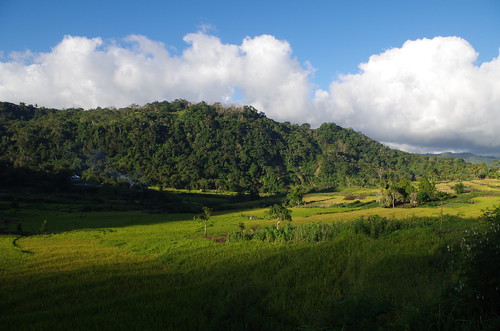
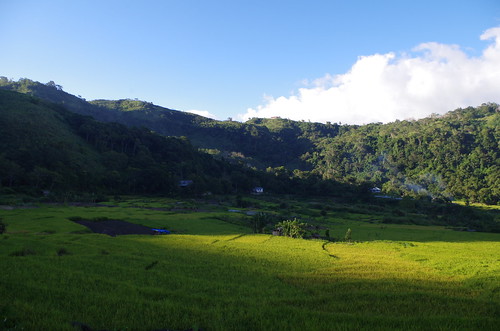
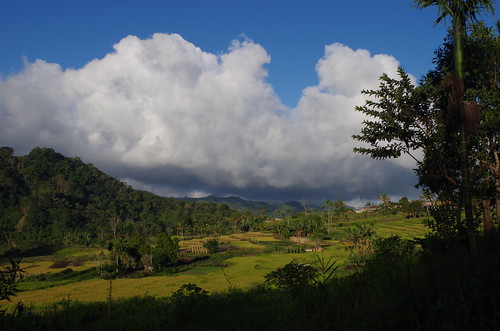
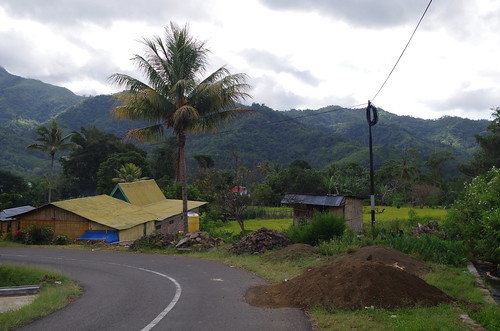
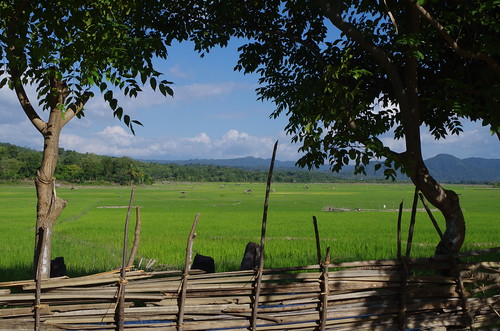
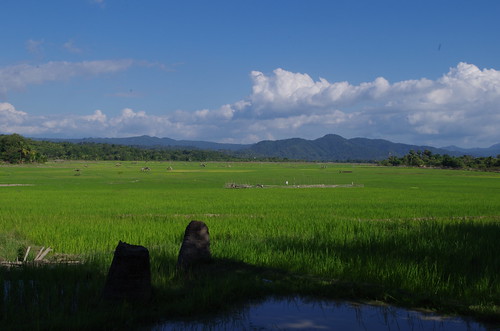
We had been expecting terrible roads to Dili. Whilst they were not great, they were way better than we anticipated. A huge bonus was the reduced volume of traffic, which meant a lot less to concentrate on. The countryside was beautiful, and even though we were exhausted we couldn't resist hopping off the bike to photograph the vibrant green rice paddies.
IMGP7625
IMGP7628
IMGP7633
IMGP7642

After a while the route switched from a narrow potholed stretch to a wide, gravel road. Works were in full flow, and we later found out that Timor Leste has plans to sort out the whole network in the next two years. For the time being however, it was dusty and tough going. I had suggested getting the bike power washed in Kupang to give us a head-start on the cleaning, and was immediately glad that Oli had rubbished the idea. Both the bike and ourselves were covered with a respectable layer of dust by the time we re-joined the asphalt, so it would have been utterly pointless.

We made it to Dili with over an hour to go until nightfall, which was much better than we had expected. We were staying in Dili's only backpacker accommodation, and from what he had heard we weren't quite sure what kind of place awaited us. Happily, it far surpassed our expectations, and although it was basic it was spotlessly clean. We treated ourselves to some Indian food from over the road, chatted to some fellow guests for a bit, then passed out exhausted.

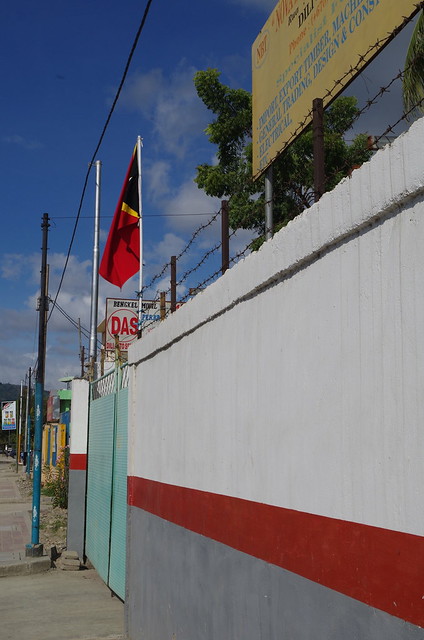
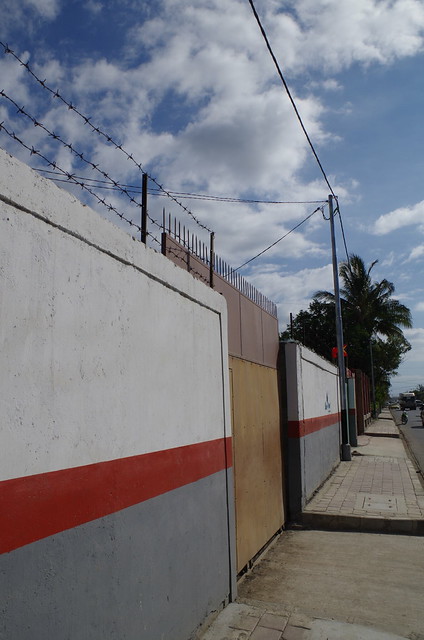
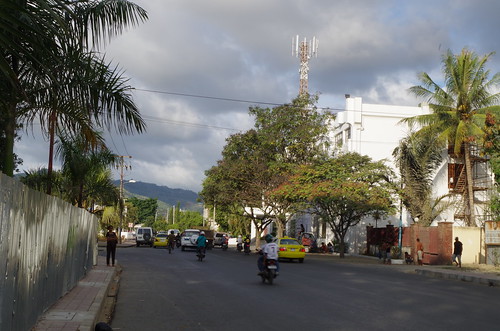
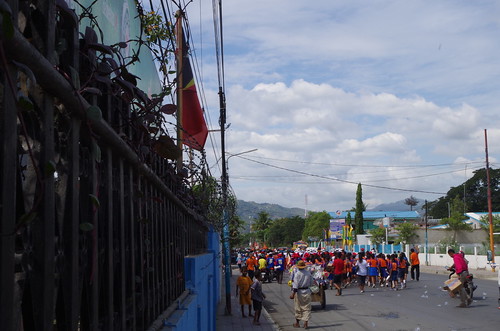
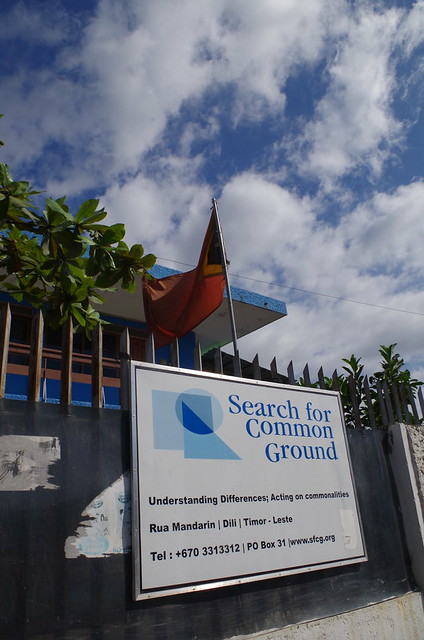
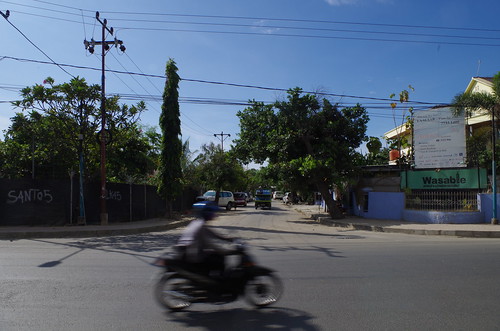
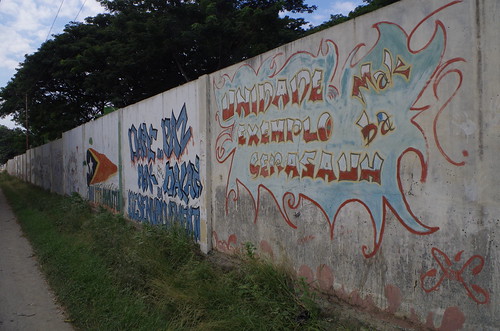
In need of a day off after the long drive, we set off to explore the city. We had been expecting it to be a little like Kathmandu or one of the rougher Indonesian cities; dusty, ramshackle and littered with rubbish. It was actually nothing like we imagined, and we rather liked it. The main road was wide, with very few buildings above one or two storeys. It was surprisingly clean and relatively quiet, with far less traffic than the average Indonesian town. It did feel slightly under siege, with most businesses having huge gates and barbed wire topped walls, a reminder of the fact that the U.N. only left the country at the end of 2012. The whole city had a laid-back feel though, nothing like the hectic and noisy urban mess we had expected.
IMGP7643
IMGP7647
IMGP7648
IMGP7650
IMGP7652
IMGP7655
IMGP7658
IMGP7661
IMGP7662
IMGP7713

Wanting to make a head-start on the shipping, we decided to walk down to the SDV office. Shipping options between Dili and Darwin are notoriously limited and unreliable, at least in overlander circles. Most people go with Toll, but after hearing that another couple had waited eight weeks in Darwin, we were keen to avoid them. From the first meeting SDV seemed a relatively safe bet. Even though they were the pricier option, we decided to go with them. We filled the rest of the afternoon with a visit to the Resistance Museum, which documented the long struggle for Timorese independence. It was a thoughtful and interesting exhibition, although we both felt that it would have been nice to have some information on the struggles post independence, as it made no mention as to why the U.N. presence was needed for the next ten years.

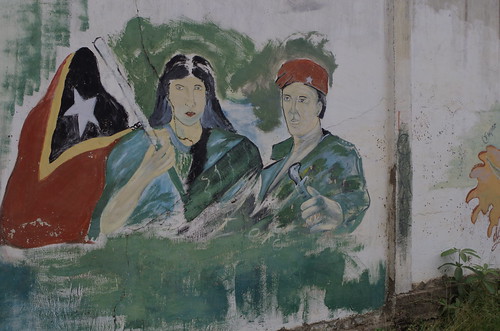
The history of East Timor is a difficult one. Colonised by the Portuguese in the 16th Century, they achieved independence in 1975. Just nine days after this Indonesia invaded, killing thousands of civilians and executing four Australian journalists. It is estimated that between 25 and 33% of the population lost their lives during the war. Indonesia had the support of many Western governments, notably the U.S.A. and Australia, both of whom saw the takeover as in their own interests. Much of the thinking behind this support can be traced (somewhat predictably) to the overwhelming fear of communism that characterised this period. The Timorese suffered under Indonesian rule until 2002, eventually re-achieving independence and beginning to forge a new nation.

We had originally planned to drive up to Hatubulico the next day, but when it came to leaving we just couldn't face it. Everyone was telling us how bad the road was and that it was still very much the rainy season up in the mountains, so we were unlikely to get the good views. We were just exhausted, so decided instead to stay in Dili and get on with the cleaning. Knowing now how long the big clean took, this was undoubtedly the right choice.

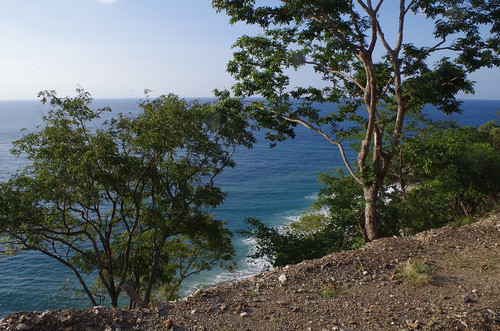
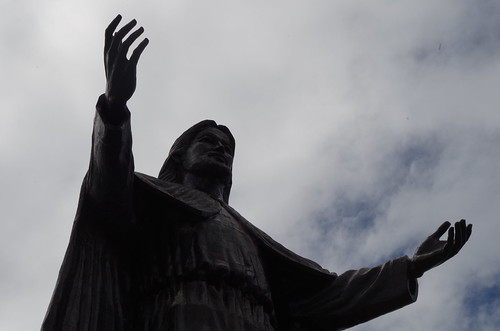
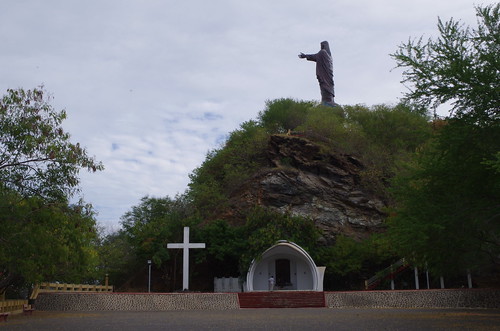
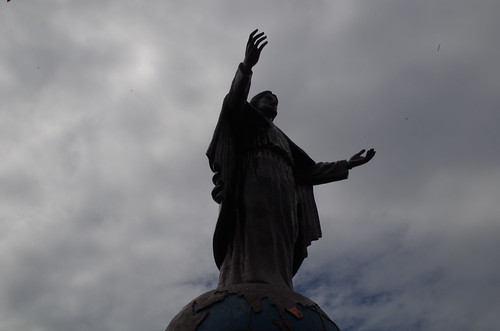
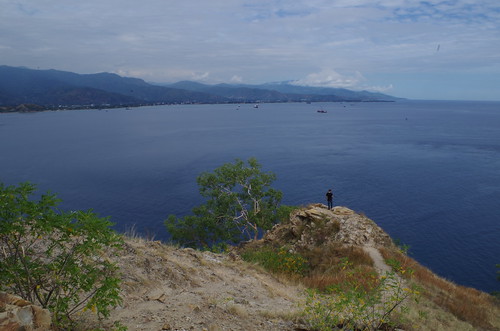
Wanting to at least get some way out of Dili, we paid a visit to the Cristo Rei, an enormous statue of Jesus sat dramatically on a headland overlooking the city. Apparently the statue was a gift from Indonesia whilst the country was still under occupation, and is perhaps Timor Leste's best known landmark. The road there took us past picture perfect beaches, astoundingly empty considering their proximity to the capital and the fact that it was also a weekend. Such a quiet city beach seems unimaginable anywhere else in the world. If you listen to the FCO advice, saltwater crocodiles are a risk here, but it didn't seem to put off the few intrepid swimmers and kayakers.

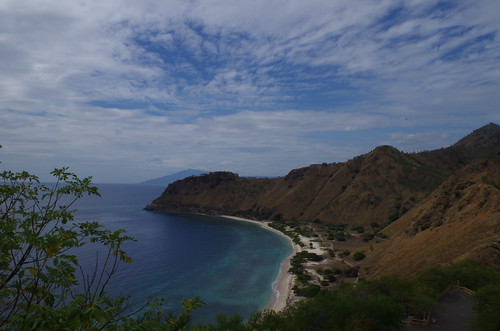
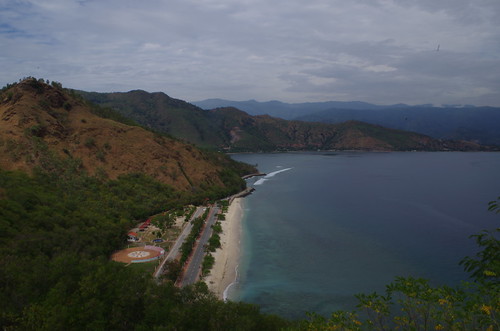
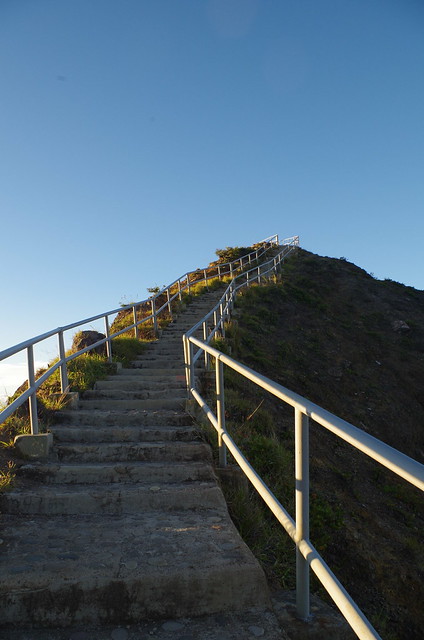
The climb up to Christo Rei was relatively short, only made tiring by the stifling heat and humidity.   En route to the peak were bronze reliefs showing the stations of the cross, and we also had incredible views over two fantastic, deserted beaches. As we stood on the headland overlooking Dili, it seemed crazy that the capital could be so unobtrusive against the mountains. We couldn't help thinking that in ten years this coastline is likely to be completely unrecognisable. I hope the area is eventually developed responsibly, as it really is a stunning natural setting.
IMGP7683
IMGP7694
IMGP7701
IMGP7704
IMGP7707
IMGP7710

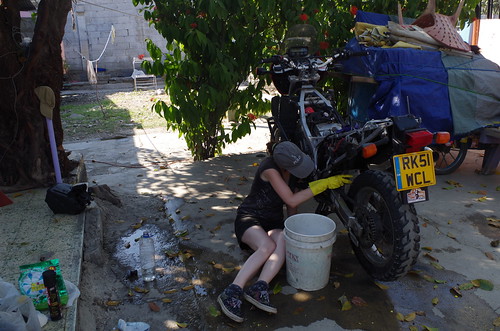
Touristing over, it was time to get on with the cleaning. We had predicted that three hard days would be required to get the bike up to quarantine standard. Oli popped down to the nearest pressure wash to give us a much needed head start, and then we got down to it. At first it was kind of fun, although we immediately started to re-evaluate how long it might take. Just cleaning the bash plate took a couple of hours, as it was caked in oil, grit and mud from many different countries. Still, we thought logically that it might be the worst bit, so maybe the other tasks would be faster.

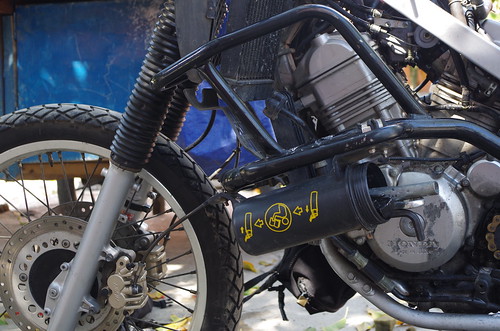
How wrong we were. The cleaning ended up taking us eight full days. The bike is thirteen years old,  and has never had a clean this deep. Adding this much ingrained crap to a year's worth of bad, unsealed roads did not make for an easy job. Low points included Oli spending two days picking flies and grit out of the radiators, and highlights included me stabbing myself in the hand with a screwdriver and Oli scraping a load of skin off his finger. Lazily we took to sorting the worst bits with petrol, which was great for cleaning but not so good for our skin. Everyone doing our route has to do this clean, but we just weren't prepared for how physically and mentally exhausting it would be. On the last night before loading we were still putting the bike back together at 10:30 p.m.. It had been a hard slog.
IMGP7714
IMGP7715

In the midst of all this we had given up on SDV and reluctantly decided to go with Toll. SDV were terrible to deal with after the first meeting, and couldn't give us a straight answer on anything at all. Unfortunately for us the Toll office lies at the end of a very dusty road, so we were apprehensive about having to drive our pristine bike there. When we got to the turn-off it was unhelpfully blocked with a danger sign and some tape. We needed to go down there, so just moved it and drove through, a definite indicator of how long we have been away from Europe!

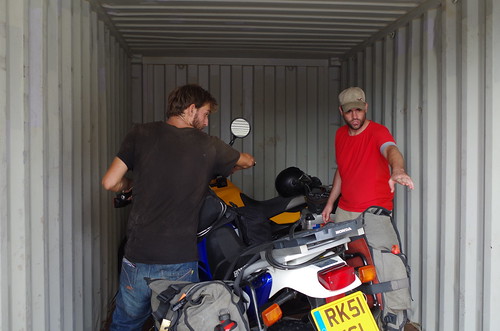
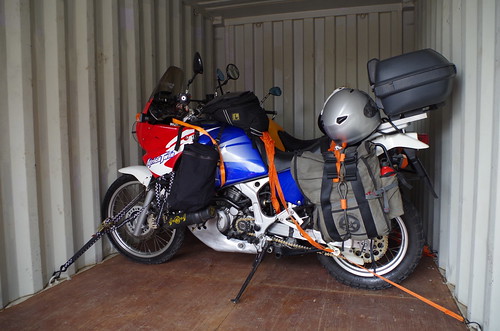
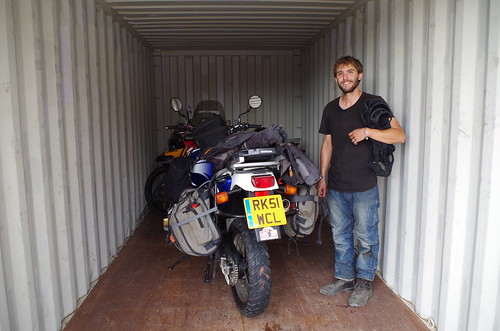
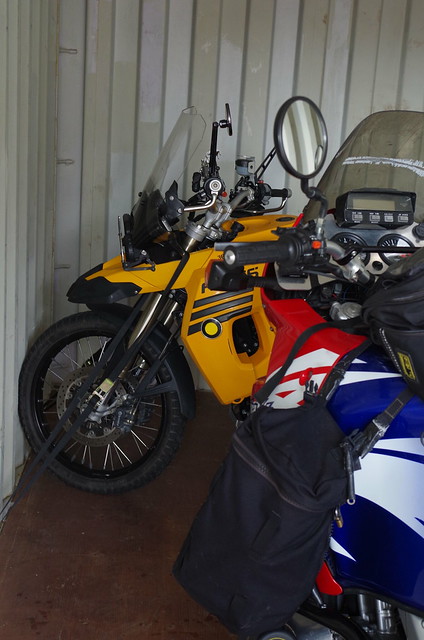
We gave the bike a quick wipe down before beginning loading, totally paranoid about every speck of dust. Happily, another biker (Amos from Switzerland) was also around, so I was quite happy that I could leave the lashing to the boys. Otherwise the situation would definitely have been Oli asking me to help make decisions I didn't have a clue about, which would only end in frustration and quite possibly minor disagreement. We were also pleased that our beloved December had some company in the form of Amos' BMW.
IMGP7719
IMGP7720
IMGP7721
IMGP7729

Ideally we would have loved to spend the next day relaxing and sorting out our luggage for Australia. Sadly though, the only vaguely affordable flight that week was the next morning at seven a.m., which meant a very early start. We were going to quite miss our home at the Backpackers. The owner, Rita, was a great lady, and had looked after us well. It seemed she was going to miss us also, as she knocked on our door before bed to give us each a parting gift of a scarf in East Timor colours. It was a lovely gesture, and we felt extra pleased about the cake we had bought to leave in our room as a surprise for her and the staff.

Like good little Europeans, we left early so that we could get to the airport two hours before departure. Evidently this is not how things are done in Timor, as when we arrived we found the airport completely dark and closed. After around half an hour the staff arrived and opened things up, and we discovered that the Airnorth check in desk was merely two portable trolleys and laptops. All our details had to be keyed in manually, so it was kind of a slow process.

Eventually it was time to go through security. To say things were a little lax is an understatement. The guy manning the x-ray machine was wearing an ancient football shirt, from the days where Sega was a sponsor. I set off the metal detector as I walked through, and immediately started patting my pockets to locate the offending item. Amazingly the guard's response to this was a shake of the head and a casual wave to tell me not to worry about it. Hard to imagine that at Heathrow!

Even though we had spent most of our time in Timor Leste elbow deep in dirt and grease, we had really liked the place. Typically the FCO advice had made it sound like a dangerous hell hole, with the information including the advice that if we became aware of military activity, we should take cover and stay away from the windows. They had also advised that gang fights were common between martial arts clubs in Dili, involving knives and machetes. We had found it a peaceful city full of friendly people, yet another reminder that the foreign office advice should be taken with a sense of balance.
IMGP7730
IMGP7733

We were looking forward to Australia, but after seven months in South East Asia we were expecting a culture shock. All the things that have become normal to us would no longer be common place. No more chickens on the city streets, no more babies / animals on scooters and no more children carrying machetes. Sensible driving, not sticking out like a sore thumb wherever we go, no more avoiding the tap water. No longer will we amuse folks just by going to the market, and no more people will be yelling “Valentino Rossi” at us every time we stop somewhere. No more drive by high-fives, no more super-cheap, delicious street food. All frustrations aside we just love the liveliness of Asia and the sense of anything being possible, the rules flexible. It had changed a lot of our perceptions and ways of thinking, leaving an almost tangible impression. We were going to miss it immensely.

Monday, 26 May 2014

The Elusive Ferry and the Three Coloured Lakes - Flores

After our final awesome breakfast at Happy Happy, we got on the road and on our way. The plan was to get to the famous Kelimutu, swinging by the town of Ende on the way to enquire about ferries to Timor. As we had come to expect from Flores, the drive served up some incredible scenery, combined with twisty spaghetti roads. Whilst we quite enjoy the corners, they are evidently not to everyone's taste. As we followed a pick-up full of people, one poor man leaned out of the back and vomited spectacularly. It really was quite impressive, albeit not something we felt the need to look at too closely. Oli braked sharply, then overtook as soon as the opportunity presented itself.
The mountain road eventually hit the coast, skirting around the cliff edge, and swooping up and down past picture-perfect ocean views. The sea was a vibrant turquoise, its colour enhanced by the black sand of the beach. Some of the beaches were pebble rather than sand, the stones an unusual colour, almost a duck-egg blue/green. Sadly their unique shape and hue makes them a desirable commodity, and they are much in demand. The local villagers were collecting huge sacks of them. The scale of the removal was terrible, and it seemed quite possible that the pebble beaches will soon be gone forever. To make things worse, people were still living in poverty, so they do not seem to be benefiting from the destruction. Probably a middle-man buys the goods for a pittance, and is selling them on for a huge profit.

Our coastal drive brought us into Ende. We had heard that ferries departed from here to Timor, but had not been able to find out the day. We assumed it would be a simple case of asking around, as surely somebody would know. Unfortunately however, I don't think it is an exaggeration to say that nobody had the slightest of clues. Annoyingly nobody actually admits that they don't know, and instead just makes up a day. In the course of asking around we ended up with confident answers covering every day of the week, at varying times and even from varying locations. Even the police officer manning the empty port didn't know, but guessed Saturday.
After an hour of fruitless questioning we were no further forward than when we had arrived, although we had seen the coast again. Somebody had said the boat to Kupang usually went from Nga Keo port, ten miles back down the road. Nobody knew anything about it there either. Slightly frustrated, we decided to abandon the mission and work out our options later.

Moni village was not far away, and we were keen to get there and kick back. Of course it was not that simple, and just a few kilometres out of Ende we encountered a road block. The cause of this was some pretty hefty roadworks, which seemed to be aiming at widening the narrow mountain route. With not many roads there was no chance of a detour, so we joined the gang of scooters and lorries steadily building up. After about half an hour they let the bikes go, which involved a rather exciting element as we had to tightly squeeze between a digger and a cliff edge. Happily, the rest of the drive was far easier, the only thrill being the gorgeous mountain scenery on the way.

Flores accommodation so far had been relatively expensive for what is on offer, so our expectations were fairly low. However, we were pleasantly surprised to find that the first place we asked at was clean, decent and within our ideal budget. The price even included hot water, a luxury for us these days. Also staying there were a Dutch couple. It was the lady's birthday, so we all celebrated with a dinner at the fanciest restaurant in town (all things being relative). The food was decent, very local fare. A nice change from the usual offering of rice and noodles.

We arrived back at our guest house to find that the owner had decided to throw a party by way of birthday celebrations. In all honesty I think it was mostly an excuse to have his mates round for an arak (local, home made palm spirit) drinking session. We hung around for a while enjoying the guitar playing and singing of one of the guys, but after a while left them to it. We had been told that the best time to see Kelimutu was sunrise, so tucked in to bed and hoped the early start would be worth it.

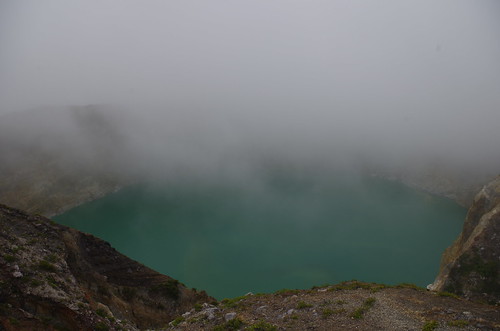
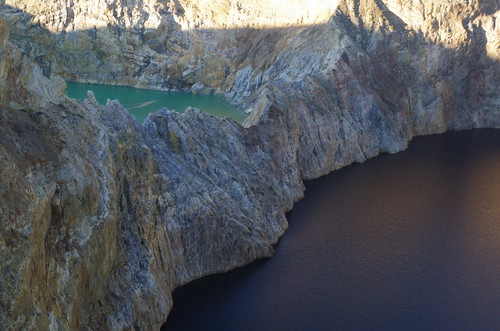
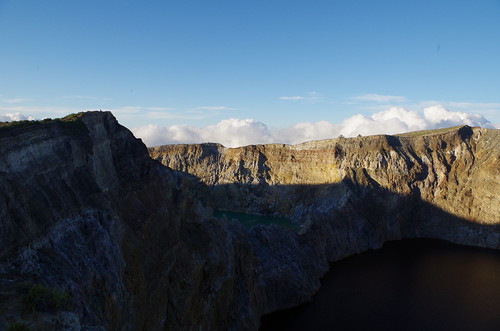
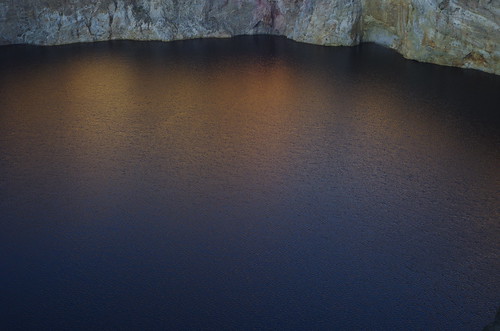
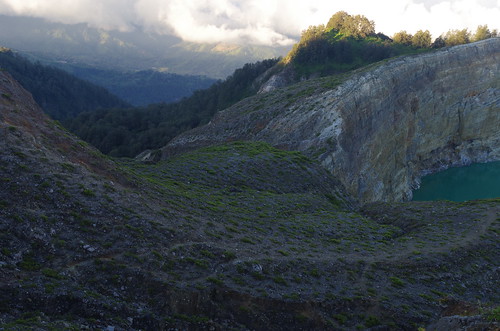
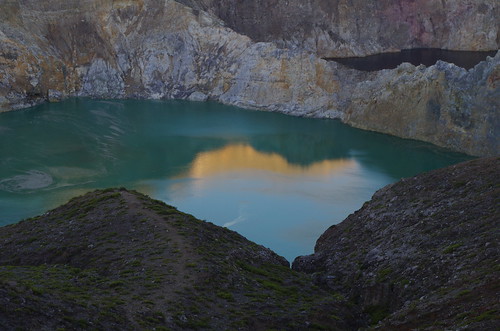
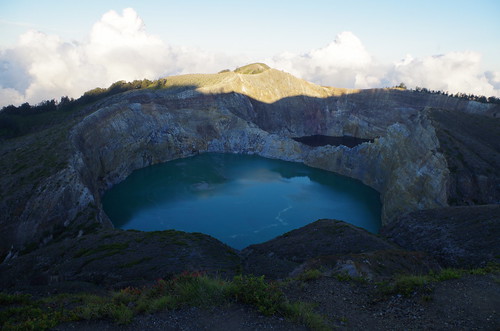
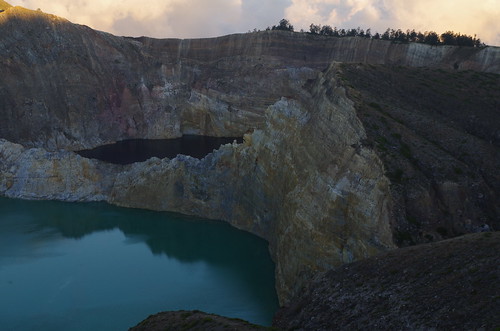
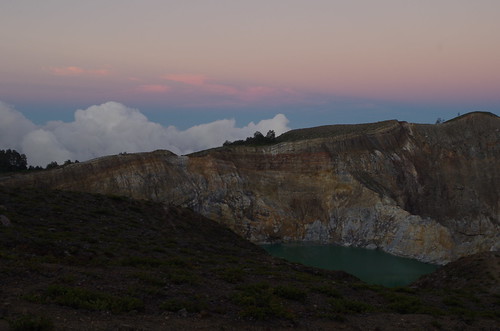
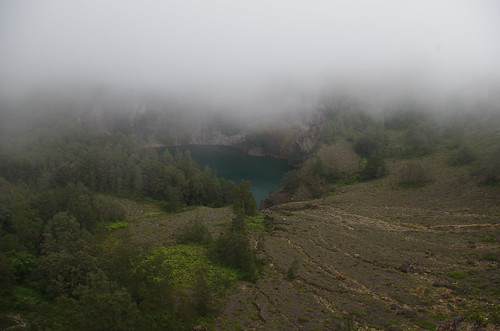
Kelimutu is perhaps the best known attraction on Flores island. At the peak of the mountain are three volcanic lakes. What makes them special is the fact that they regularly change in colour, with turquoise, green, chocolate and red all being reported over the years. At the time of our visit one was aqua, one chocolate, and one dark green. However, just two months before our visit the chocolate one had been turquoise in colour. Nobody is entirely sure on the reasons for the colour shifts, but it is widely hypothesised to be related to changing mineral contents in the water.

Oli and I usually avoid sunrise excursions, but after the experience of Bromo we had started to reconsider this stance. We were up accordingly at 4:30, riding the bike up a steep, winding mountain to get to the national park gate. I went in to buy our tickets, and was disappointed to find that not only were  tickets considerably more expensive for foreigners, but that there was also a fee for taking in a camera. The camera fee itself cost more than both our tickets together, and was also ten times more expensive for us than if an Indonesian person had wished to bring in theirs. I complained politely to the ticket attendant, who just looked uncomfortable and giggled in response. Dual pricing has been my pet hate of travelling, and has been an issue in almost every country since Turkey. I just don't think it is a very nice way to treat visitors.

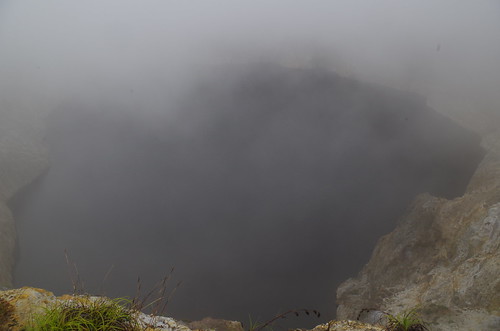
We parked up the bike and began the short climb up to the lakes. In the dark we could see that it was a little misty, but we hoped that it would begin to clear as the sun rose. Sadly, it did not. If anything, it got worse. We climbed all the way to the top and stood despairingly as the cloud swirled around us. Sunrise was non existent, just a gradual realisation that it was no longer dark. At one point the mist cleared slightly for about ten seconds, affording us a tiny glimpse of the vibrantly coloured aqua lake. Gradually the other tourists peeled away and went home, leaving just us and three other visitors. We got chatting to one of them, who was an Indonesian traveller and blogger from Java. He was a lovely guy, and told us that this was his third attempt at seeing the lakes, with each visit being thwarted by the weather. Eventually he decided to leave also, so we wished him luck for next time.

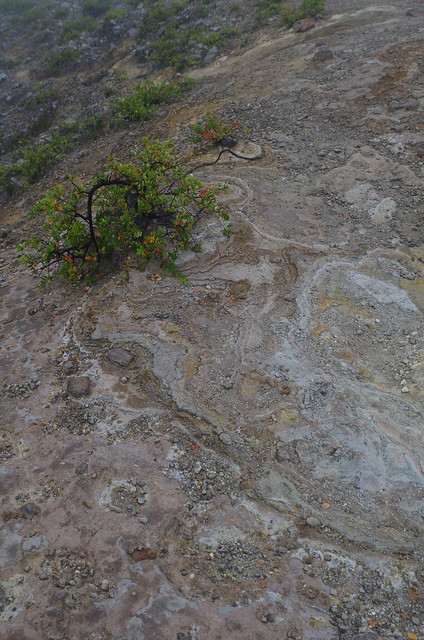
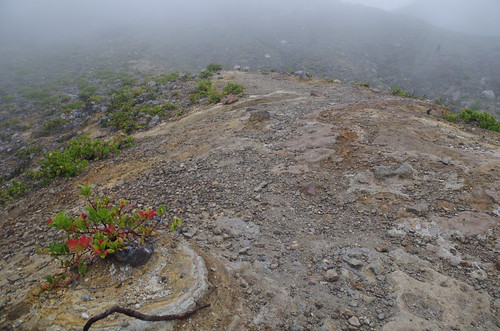
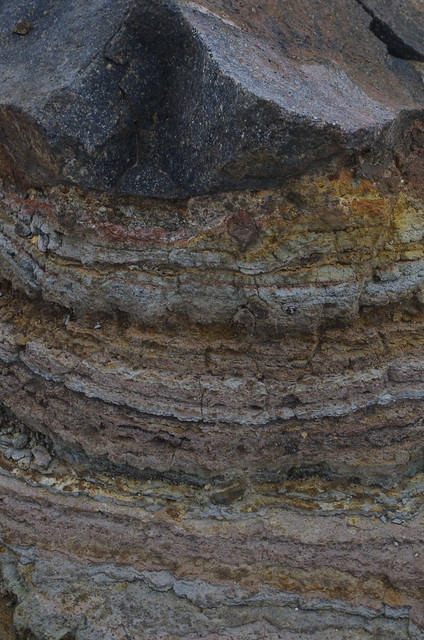
We sat it out for a little while longer, before also deciding that conditions were unlikely to improve. On the way back down we walked to the edge of the turquoise lake to see if we could get a closer look, but again only got a tiny glimpse when the mist gave us a few seconds grace. Wanting to try and get our moneys worth from the camera fee, we instead consoled ourselves with looking at the interesting patterns and colours in the rocks around us. All in all it had been a bit of a disappointing visit, especially considering that it had been a significant detour for us. We walked back to the bike, feeling slightly dejected. To make things even better, it rained on us all the way back down the mountain, making the road treacherous and slippy. We couldn't even photograph the beautiful rice paddies, as the camera lens kept steaming up.

IMGP7417
IMGP7422
IMGP7425
IMGP7430
IMGP7438
IMGP7440

Back in Moni, we were looking forward to a relaxing day, planning to just sit on the porch and watch village life trundle by. After doing this for most of the day we went for a nap, then awoke to bright sunshine. As we looked up at the hills it seemed that conditions were clear. With nothing to lose we thought we might as well try again, so hurriedly put on our bike gear and scrambled up the mountain in the fading afternoon light.

IMGP7442
IMGP7443
IMGP7448

When we arrived at the park gate, the ticket officer wanted us to pay again. This seemed decidedly unfair to us, seeing as our morning views had consisted of bugger all. Luckily I am not too dignified to beg, and just pleaded desperately until the lady wavered and allowed us through. At this we switched to thanking her profusely, then carried on for the last few kilometres to the car park. We marched up to the lakes as quickly as possible, huffing and puffing due to our questionable fitness. There wasn't much light left in the day, and we very much wanted to make the most of it.

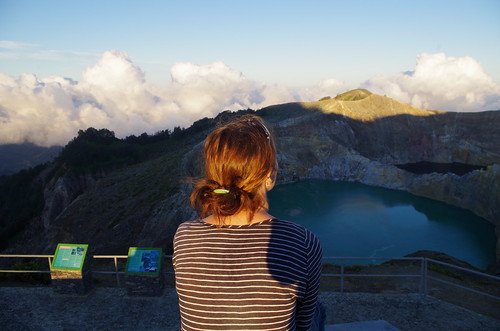
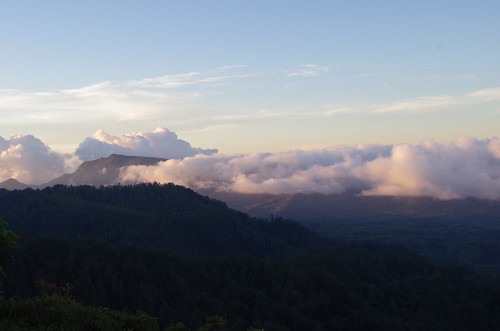
It was well worth the effort. In the clear light of the evening we were in a completely different world, nothing like the foggy soup of the morning. The landscape was revealed as an epic and rocky expanse, the lakes themselves sitting brightly within. The colours of the aqua and chocolate lakes were enhanced beautifully by the evening sun, and the views from the top were fantastic. We sat for a while drinking it all in, very glad that we had given it another chance.

IMGP7455
IMGP7457
IMGP7461
IMGP7467
IMGP7475
IMGP7477
IMGP7480
IMGP7488
IMGP7489
IMGP7496
IMGP7508
IMGP7522
IMGP7526

The light was fading fast, and if at all possible we wanted to get down the harder part of the road before the dark set in. Oli however decided he couldn't resist trying to chuck some stones into the lakes, so instead we spent the last rays of sunlight doing this. The walls of the lakes are a lot higher than they appear from the top, as the stones fell for a long time before making any noise. We got back to the bike just as night fell, working our way back down the hair-pin bends of the road. With almost no light pollution the stars were beautiful. We paused on the side of the road to better admire them, thousands of twinkling lights against a jet-black sky.

We rather liked Moni village, so the next morning were toying with staying an extra day. A lot of asking around had confirmed that there should be a ferry to Kupang from Aimere on Saturday, so we had a day to kill either in Moni or back in Bajawa. The peaceful atmosphere of the village was definitely tempting us to stay, but after a little deliberation we decided it was more practical to go back to Bajawa for a night.

The included breakfast at our hotel was tasty but small, so we greedily decided to go out for a second. Opposite the restaurant we saw a couple of cars stop, with tourists getting out, disappearing along a path for a while, then coming back. Thinking there must be something worth seeing down there, we thought we might as well take a detour before walking home.

As we started to descend the footpath, we were met by three elderly ladies, their teeth stained red by chewing betel nuts. We greeted each other and walked on, Oli and I noticing that each of them was carrying an enormous machete. Carrying knives has been fairly common throughout rural Indonesia, but especially so in Flores. Even young children can often be seen casually  wandering around with eighteen inch blades either in their hands or strapped to their belts. Of course here they are used for practical purposes, but we could easily imagine the national crisis and Daily Mail headlines if the same situation was to be transplanted to England.

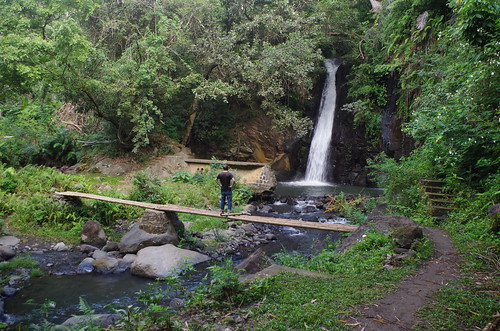
It turned out that the footpath led to a waterfall, set prettily within the woodland. In front of it was a slightly precarious looking bamboo bridge. Oli went to check it out, and we were both impressed that the old ladies must regularly navigate it. It was a tranquil spot, with no noise other than the sound of running water. It would have been easy to stay for a while, but alas we needed to get back on the road. 

IMGP7532
IMGP7540
IMGP7544
IMGP7547
IMGP7550

It was a tough 100 miles back to Bajawa. We had to pass the same roadworks as before, waiting on the roadside as lorries cleared huge loads of soil and dumped it into the ravine. Due to lack of detour options in much of Asia, it is often necessary to ride right through the thick of major works. Mostly this is okay, but sometimes it can be a little unnerving. Waiting on the road whilst somebody goes at the crumbling cliff above with a pneumatic drill is perhaps not the safest of situations. Thankfully we made it back to Bajawa unscathed, and spent a pleasant evening relaxing back at the Happy Happy Hotel.

Ideally we would have liked to spend the next night in Bajawa rather than heading down the mountain to Aimere. However, estimates for the ferry departure time ranged between seven a.m. and two p.m. As the boats are not exactly frequent, we couldn't run the risk of missing it, so decided to ride to Aimere and spend the night there. Somewhat predictably accommodation options were limited. We ended up in a just about acceptable place, complete with a menagerie of cockroaches and mosquitoes. The bathroom looked like it had never been treated to a good scrub, but the price was right, and it was only for one evening.

Paranoid about missing the boat, we were up and getting ready at 5:30 a.m.. Oli popped down to the port before seven to check if anything was going on, and was told by somebody hanging around that the boat wouldn't leave until the afternoon. Not quite willing to take their word for it, we rested until eight and then went to wait at the port instead. This time the ticket office was open. We purchased our tickets, then were told that we had to buy life insurance to board the boat. We tried in vain to explain that our travel insurance already covered us, then realised we might have to accept it as just one of those stupid rules. Plus, it was only £1 for both of us, so not really worth the argument.

We spent the next seven hours hanging around the port. We talked with one of the port officials, who was not only a lovely guy, but also had a side business brewing arak. He talked us through how it is produced, backed up with illustrative photos from his phone. As well as our port friend, we also met a sweet girl who was moving to Kupang to study English, and also got stalked by some cheeky children. They kept asking us for money, until Oli started babbling Turkish, which seemed to scare them. Amusingly, one of the kids was wearing a t-shirt emblazoned with Thomas the Tank Engine, complete with the phrase “Built for Speed”. I wasn't aware that Thomas was known as a speed freak, but enjoyed it nonetheless.

Interestingly, as we waited inside, we noticed that the insurance guy was not insisting that everyone purchased it. Oli and I were annoyed that we had been singled out, especially as we are probably the only ones who had it already. Oli marched up to the man and asked for our money back. Amazingly, the guy handed it back without a fuss. To be honest we don't even really need life insurance, as its not like we have any assets to sustain or a mortgage to pay. I know it's sad, but getting our £1 refunded felt like a mini victory.

After what seemed like an age, the boat finally arrived at the port, everyone rushing towards the dock in a flurry of activity. As we boarded people were still unloading their cargo, which included two live pigs. One of these was a huge boar, and was not keen on moving at all. At first I thought it was just lazy, then realised that it seemed to be struggling to stand. Its owners were being really rough with it, eventually dragging it off squealing, which was quite upsetting. Unfortunately the pigs had also crapped all over the parking deck, and it was immediately obvious that their mess was going to stay there for the duration of the next crossing. People didn't seem to mind though, as several families were setting up camp on this level.

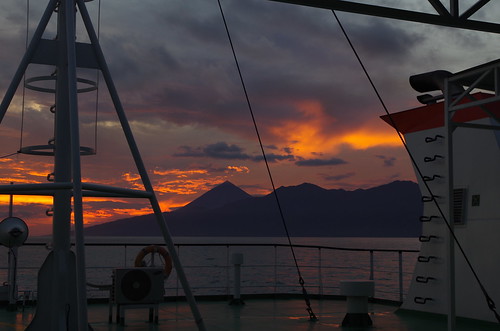
As soon as the bike was secured we got out of there, looking for a quiet spot. The ferry was heaving with people. It was a new boat, less than two months old, but was not really adequate for the purpose. It was designed as a vehicle ferry, but the vast majority of people on board were foot passengers. There was nowhere near enough capacity for that many people, and everyone had already spilled out of the tiny lounge, setting up camp in the corridors as the dormitory was similarly stuffed. We followed our usual strategy of heading straight to the top of the boat, ending up on the highest deck, entirely devoid of other passengers. Compared with the chaos below, it was almost too good to be true.

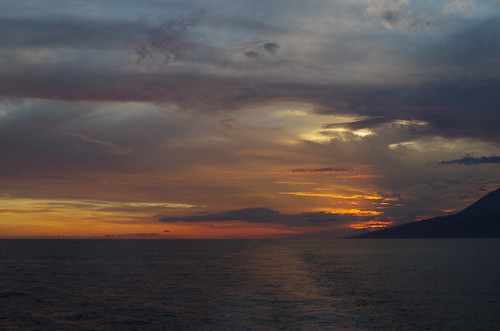
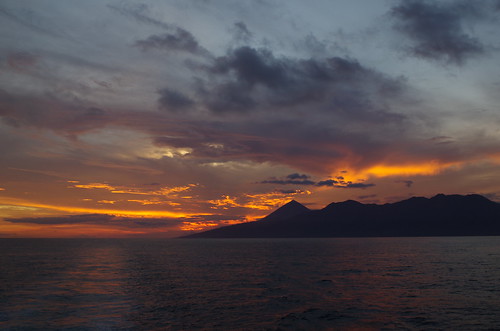
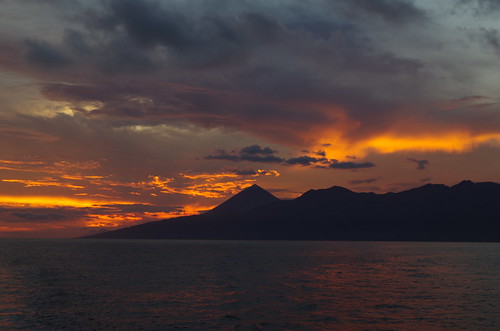
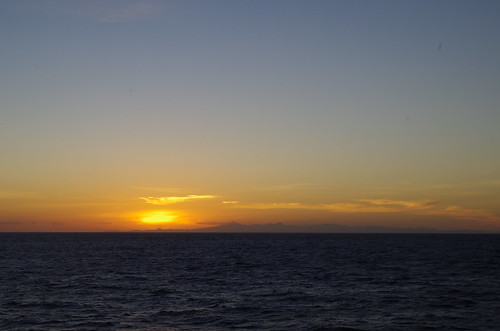
We quickly deduced that the reason for this might have had something to do with the “crew only” signs on the doors and the locked emergency exits, something we had entirely missed on our search for peace and quiet. Nobody seemed to mind though, and we even had a large table and two benches to ourselves. The crew also didn't care that we were using their toilets through the night, a real bonus considering that there were just three for men and three for women in the public areas. As if this wasn't awesome enough, we even had a fabulous view of the sunset.

IMGP7556
IMGP7560
IMGP7565
IMGP7572
IMGP7575
IMGP7579

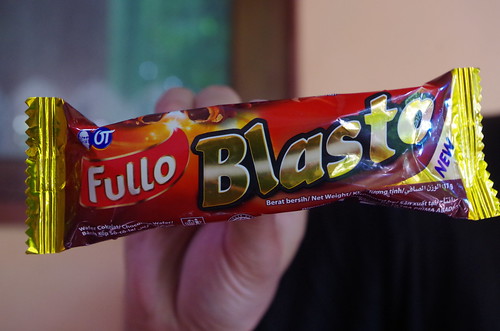
There had to be a catch somewhere. Food has been readily available on all the crossings so far, even if it is just instant noodles. Seeing as this crossing is by far the longest, we assumed it would be no different. We had come prepared with a few supplies, including a chocolate bar that I had purchased for the name alone. Unfortunately the rice cakes we had bought in Bajawa had not fared too well in the heat, and were now inedible. Oli went to go and buy us some food from the cafe, then reappeared looking dejected, with only a pack of biscuits in his hand. We couldn't believe it, packet noodles were even available on the short crossing between Sumatra and Java. This one was going to take a minimum of fifteen hours, and the only food available for purchase on board was biscuits. We bulked out our dinner with a few oranges from our meagre supplies, then settled down to try and get some sleep.

IMGP7554

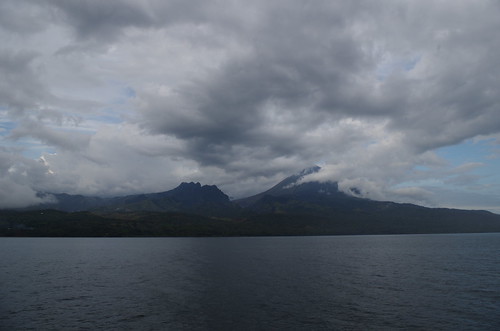
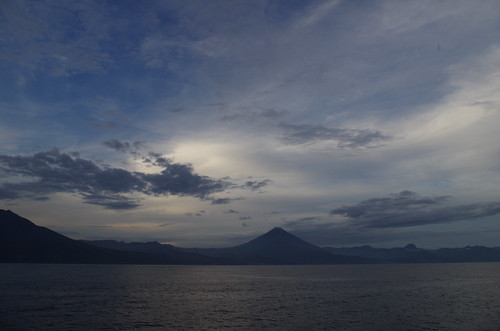
Considering that our beds were just narrow, slatted benches, we slept amazingly well. It was actually quite pleasant sleeping outside in the sea air, even if I did wake up aching every hour or so. We were awake in time for the sunrise, and started to get excited about arriving on dry land. As the boat  cruised steadily along, we saw seemingly infinite flying fish. Neither Oli nor I had ever seen these creatures before, and were amazed at the distances they could cover when out of the water, their silvery bodies gleaming in the sun. The last few hours passed quickly, and it didn't seem like long before we could see the shores of West Timor.

IMGP7584
IMGP7591

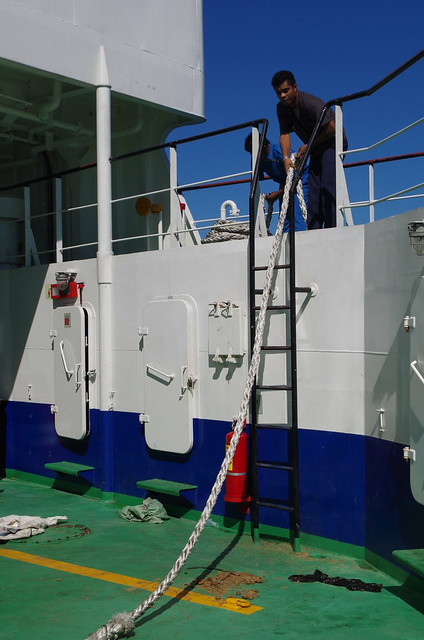
As we approached the docks, Oli and I descended back down to the vehicle deck. It was grim down there. People had made no attempt to keep it clean, and rubbish and fruit peelings were strewn everywhere. The pig crap had been trodden all over the place and dried out, mingling with the litter. Even worse, our bike had been parked by a ladder, and people had used Oli's seat as a stepping stone, treading pig mess all over it. Somewhat fairly I feel, we were not impressed with this. Having actually had quite a pleasant crossing, we were instantly seized with the need to get out of there as quickly as possible.

IMGP7594

We had been on the ferry for eighteen hours by the time we disembarked, but were feeling surprisingly good as we rolled off and hit the road. There was light at the end of the tunnel. As a treat, we had booked ourselves into Hotel La Hasienda, a Mexican themed hotel run by a German ex-pat. We had heard great things from other overland travellers, and couldn't wait to arrive. Comfort and cleanliness awaited us.